Void Property Cleanup in Scotland: Everything You Need to Know
Empty properties in urban Scotland can be quickly occupied if left unsecured or under-monitored, whether they are council flats, repossessed rentals, or commercial units. Once squatters leave or a property remains vacant (void property) for an extended period, cleanup is rarely simple.
What does a squatted or long-term void property look like?
While each case is unique, several common issues frequently arise:
- Forced entry damage – broken locks, kicked-in doors, boarded or smashed windows, and damaged door frames from initial and repeated access.
- Accumulated waste – general rubbish, food packaging, discarded clothing and furniture, often built up over weeks or months.
- Drug and alcohol paraphernalia – needles and other injecting equipment, foil, and empty containers, which carry a direct sharps injury risk.
- Human and animal waste – where sanitation has broken down, waste is sometimes present in unexpected places, including on floors and in stairwells.
- Fire damage or scorching – from makeshift heating, candles, or cooking fires, particularly in properties without a working electricity or gas supply.
- Damp, mould, and water damage – unheated, unventilated voids develop mould rapidly, especially in Scotland’s climate, and this is often made worse by unresolved leaks.
- Stripped fixtures and cabling – copper piping, boilers, and electrical fittings are common targets for removal and resale.
- Pest activity – rodents and insects move into properties left unmaintained, adding droppings, nesting material and gnaw damage to the list.
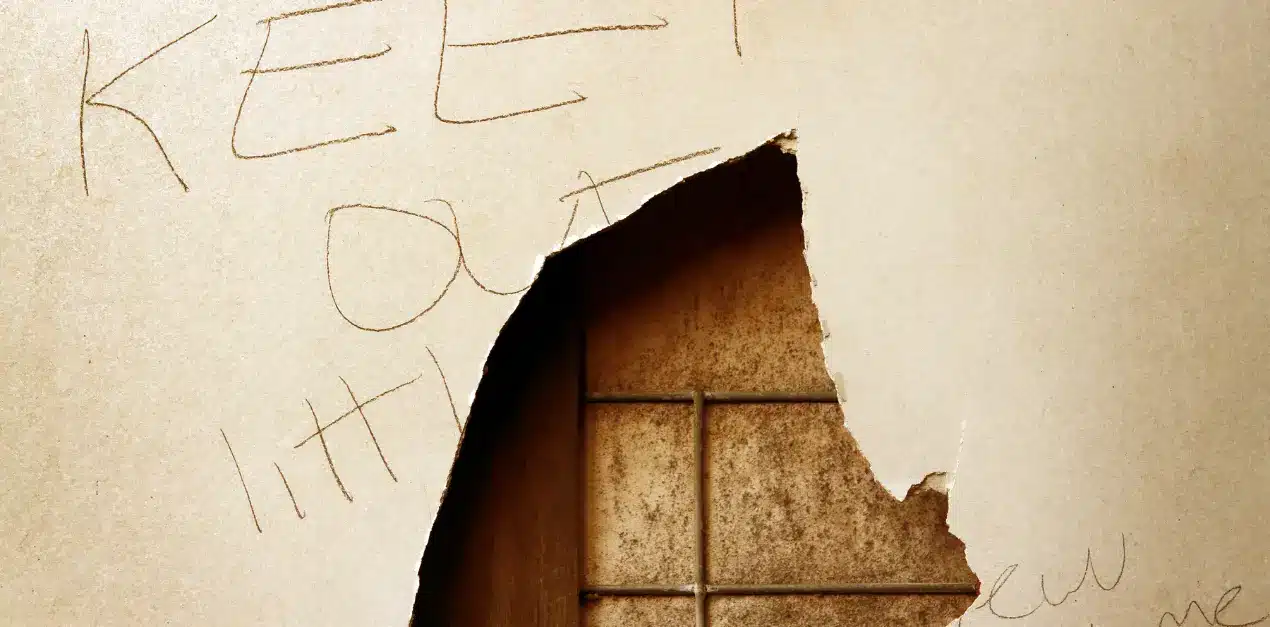
- Graffiti and structural damage to internal walls and doors.
For housing associations and councils managing multiple void units, property conditions can vary significantly, even within the same street. Therefore, an individual risk assessment is essential before work begins, rather than applying a standard approach. The Scottish legal context also matters, as explained below.
The Scotland-specific legal context
Scotland’s position differs from that of England and Wales in a way that matters in practice for landlords and councils. Squatting has been a criminal offence in Scotland since the Trespass (Scotland) Act 1865, whereas the equivalent criminalisation of residential squatting in England and Wales only came into force with the Legal Aid, Sentencing and Punishment of Offenders Act 2012. In practice, this means Scottish property owners and councils have not needed to rely on the same civil eviction routes that were historically necessary south of the border, though a landlord can still raise a summary cause action for recovery of heritable property in the sheriff court where required, and must prove title to the property along with the occupier’s lack of title.
However, enforcement is inconsistent. Prosecutions for squatting in Scotland remain low, and police may treat occupation as a civil matter for property owners to address rather than pursuing criminal charges. As a result, councils and housing associations often rely on estate management and remediation of contractors to restore properties, rather than solely on the criminal justice system. This practical reality leads to the housing obligations below.
Several considerations are specific to the Scottish social housing and council context:
- Councils have statutory obligations around empty homes and void turnaround times, and prolonged voids attract scrutiny both internally and from tenants on housing waiting lists.
- Under Scotland’s homelessness legislation, local authorities have duties to secure accommodation for the homeless, which puts additional pressure on void turnaround speed.
- Housing associations typically have their own void standard policies that a property must meet before re-letting, and biohazard or contamination issues will automatically fail that standard.
From a remediation perspective, however, the requirement is consistent for councils, housing associations, and private landlords: once legal access is regained, professional decontamination is necessary before the property can be re-entered, inspected, or re-let. This is why the biohazard risks below are so important.
Biohazard risk in void properties
Squatter and void cleanup differs significantly from a standard end-of-tenancy clean and requires specialist handling rather than a general cleaning contractor:
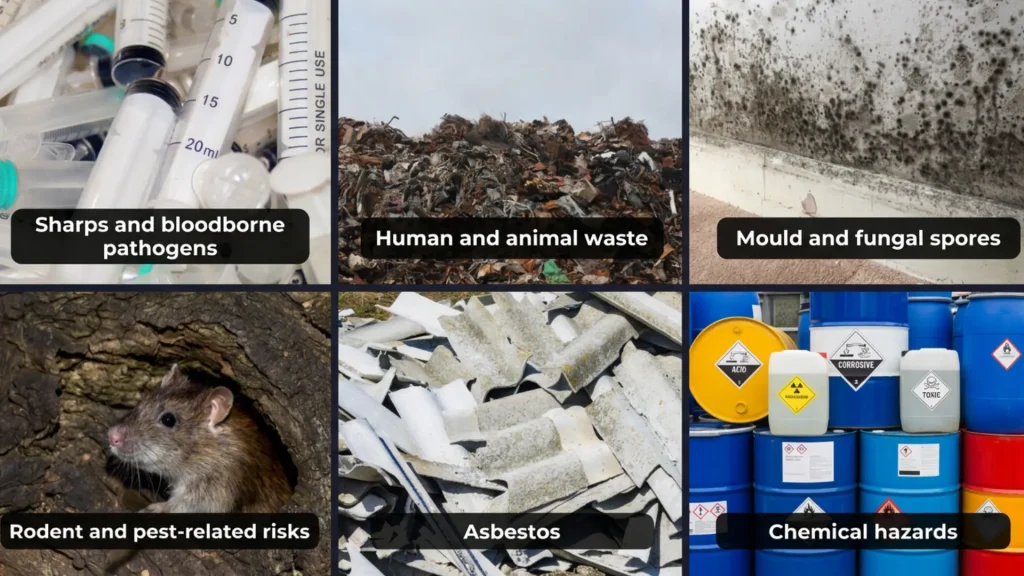
- Sharps and bloodborne pathogens – discarded needles present a direct injury risk and a potential route for transmission of Hepatitis B, Hepatitis C and HIV. Sharps must be located, safely contained and disposed of via clinical waste routes, not general refuse.
- Human and animal waste – exposure risks include E. coli, Salmonella, and other gastrointestinal pathogens, as well as the general infection risk from prolonged contamination of surfaces and soft furnishings.
- Mould and fungal spores – untreated damp in an unheated Scottish property can escalate to extensive mould growth within weeks, posing a respiratory hazard to anyone entering without protection, including tradespeople sent in ahead of remediation.
- Rodent and pest-related risks – droppings and urine from rodent infestation carry a risk of Weil’s disease (leptospirosis) and other pest-borne illness, particularly relevant in older tenement and ex-council stock with a history of pest issues.
- Asbestos – a genuine consideration in a proportion of older Scottish housing stock, particularly pre-1980s builds, and any disturbed materials (textured ceilings, old pipe lagging, floor tiles) should be assessed before general clearance work begins.
- Chemical hazards – solvent residue, drug-manufacturing by-products (rare, but not unheard of) and general chemical contamination from stored substances.
Given these risks, a squatter or void cleanup must begin with a hazard assessment rather than immediate clearance. Those commissioning the work, including council estates teams, housing officers, or private landlords, should expect contractors to inquire about the property’s history and condition before providing a quote. The cost section below shows how those findings affect pricing.
Void property clearance: cost expectations
Costs vary significantly based on scale, contamination level, and access (light void clean, moderate contamination, high-risk biohazard clean. We also need to account for additional cost drivers such as property size, number of rooms affected, height/access constraints (stairwells, tenement flats), asbestos testing where relevant, and any structural making-good (doors, locks, boarding) needed to re-secure the property.
For councils and housing associations managing multiple voids, a framework or block-rate agreement with a single specialist contractor is often more cost-effective than commissioning jobs individually. This approach also enables faster turnaround to meet void targets. The process section below shows how that work is typically carried out.
Vacant property clearance process
- Initial assessment and risk survey – a site visit to identify hazard categories before any work starts.
- Secure access – confirming legal right of entry has been established, and making the property safe to enter, including temporary securing of doors and windows.
- PPE and containment – our technicians work in appropriate protective equipment, with the property zoned to prevent cross-contamination between hazardous and non-hazardous areas.
- Waste categorisation and removal – general waste, hazardous waste and clinical/sharps waste are separated and removed via the correct licensed disposal routes.
- Deep clean and decontamination – surfaces, floors and fixed furnishings are cleaned and disinfected; fogging or fumigation is used where contamination is more severe.
- Mould, damp, and pest remediation – addressed as a separate phase when present, as surface cleaning alone does not resolve active mould or infestations.
- Making safe and referral for repairs – forced-entry damage, broken locks, and structural issues are noted and, where outside the remit of the cleaning works, referred on for repair.
- Final inspection and reporting – a completion report, including photographic evidence, confirms the property meets the required standard for re-letting, inspection, or handover. This documentation is valuable for councils and housing associations that require an audit trail for compliance, and it completes the process described above.
Specialist cleaning support
Squatter and void property cleanup in Scotland involves property law, public health, and housing compliance. While the legal process for regaining access differs across the UK, the practical challenge remains the same: these properties present significant biohazard risks and require a structured, risk-assessed approach rather than a standard clean.
At Perfect Clean UK, we combine compliance expertise with practical biohazard remediation to ensure voids are restored quickly and safely to the required standard.