How to Prepare for Awaab's Law in Scotland Before October 2026
A new set of legal responsibilities is about to change how landlords and housing groups in Scotland deal with damp and mould. Called Awaab’s Law, the Investigation and Start of Repair (Scotland) Rules 2026 will begin on 6 October 2026, and they apply to both social and private landlords right from the start.
For an industry used to handling damp within a “reasonable time,” this is a clear change. Reasonable is being replaced by exact, enforceable deadlines, and landlords who don’t have a way to meet them risk compensation claims, legal action, and reputational harm.
In this blog post, we describe what the law is, who it covers, and what landlords and housing associations should be doing right now to get ready.
The story behind the law
Awaab’s Law is named after Awaab Ishak, a two-year-old boy from Rochdale who died in December 2020 from a respiratory condition caused by prolonged exposure to damp and mould in his family’s housing association flat in England. His parents’ campaign for change, supported by the Manchester Evening News and Shelter, led to the Social Housing (Regulation) Act 2023 and a set of statutory requirements for social landlords in England, which took effect in October 2025 and is being extended to the private rented sector there in 2026.
Scotland is now doing the same and going further. In March 2025, the Cabinet Secretary for Social Justice said the Scottish Government planned to introduce a similar law, and the Housing (Scotland) Act 2025 gave them the power to do this. Unlike England’s gradual approach, Scotland’s law applies to both social and private rented homes from the start, showing the Government’s goal of giving tenants more certainty and lowering long-term exposure to health risks.
What Awaab's Law requires
The rules change Scotland’s current Repairing Standard to clearly say that a rented property must be “mostly free from damp and mould.” Along with this duty is a set schedule called the 10-3-5 rule that starts once a landlord is told by a tenant, or finds out, that a property might have damp or mould:
- Investigation: 10 working days. The landlord must have a qualified person inspect the problem within 10 working days of discovering it to determine whether the property is mostly free from damp and mould and whether repairs are needed.
- Written findings: 3 working days. After the investigation is done, the tenant must get a written summary of the results within 3 working days.
- Start of repairs: 5 working days. If repairs are needed, they must begin within 5 working days of the investigation’s completion.
- Completion: 20 days. If a repair is needed, compensation rules apply if the work is not finished within 20 days.
- Emergency hazards: 24 hours. If the damp or mould poses an immediate danger to a tenant’s life or health, steps must be taken to make the property safe within 24 hours, outside the normal timeline.
Who is covered?
This is one of the areas where Scotland’s approach differs most clearly from England’s. The regulations apply to:
- Social landlords, that is, local authorities and registered social landlords or housing associations.
- Private landlords covering private rented sector tenancies from the same commencement date, rather than via a delayed rollout.
Some tenancy types are expected to be excluded at first, but the Scottish Government plans to include all tenancies over time. Landlords should see the current rules as a minimum, not the limit. The coverage will likely grow, and in 2026–2027, similar rules in England will also cover additional hazards, such as extreme cold and heat, building problems, fire and electrical risks, and hygiene or food safety.
The rules say the investigation must be done by a “competent person,” not just anyone available. While full official guidance is still being finalised by the Scottish Government, the trend is towards investigations that produce clear, professional written reports with evidence of the cause of the damp or mould, not just a quick verbal opinion.
In practice, this means surveyors and technicians with recognised qualifications or similar specialist training in damp and mould checks. For housing providers, this detail makes the law more than just paperwork: a competent-person investigation must clearly find the real cause (like water coming through walls, rising damp, condensation, poor ventilation, or a building fault) so the right repair can be done and can hold up if a tenant questions it.
Fines for non-compliance
The financial and legal risks here are real, not just symbolic. Landlords who miss the legal deadlines face:
- Compensation payments to tenants for missed investigation, reporting, or repair-commencement deadlines.
- Rent reduction orders, reportedly up to 90% of rent in cases in which conditions are severe and not resolved.
- Fines, with figures discussed in the sector running as high as £40,000 for serious or repeated breaches.
- Repairing Standard Enforcement Orders from the First-tier Tribunal for Scotland (Housing and Property Chamber), which can compel landlords to carry out specified works within a set timeframe.
Besides direct penalties, housing associations and councils also face reputational and contractual risks. They answer to regulators and tenant review groups and are increasingly required to report on damp and mould performance.
When mould is a structural problem, not a cleaning problem
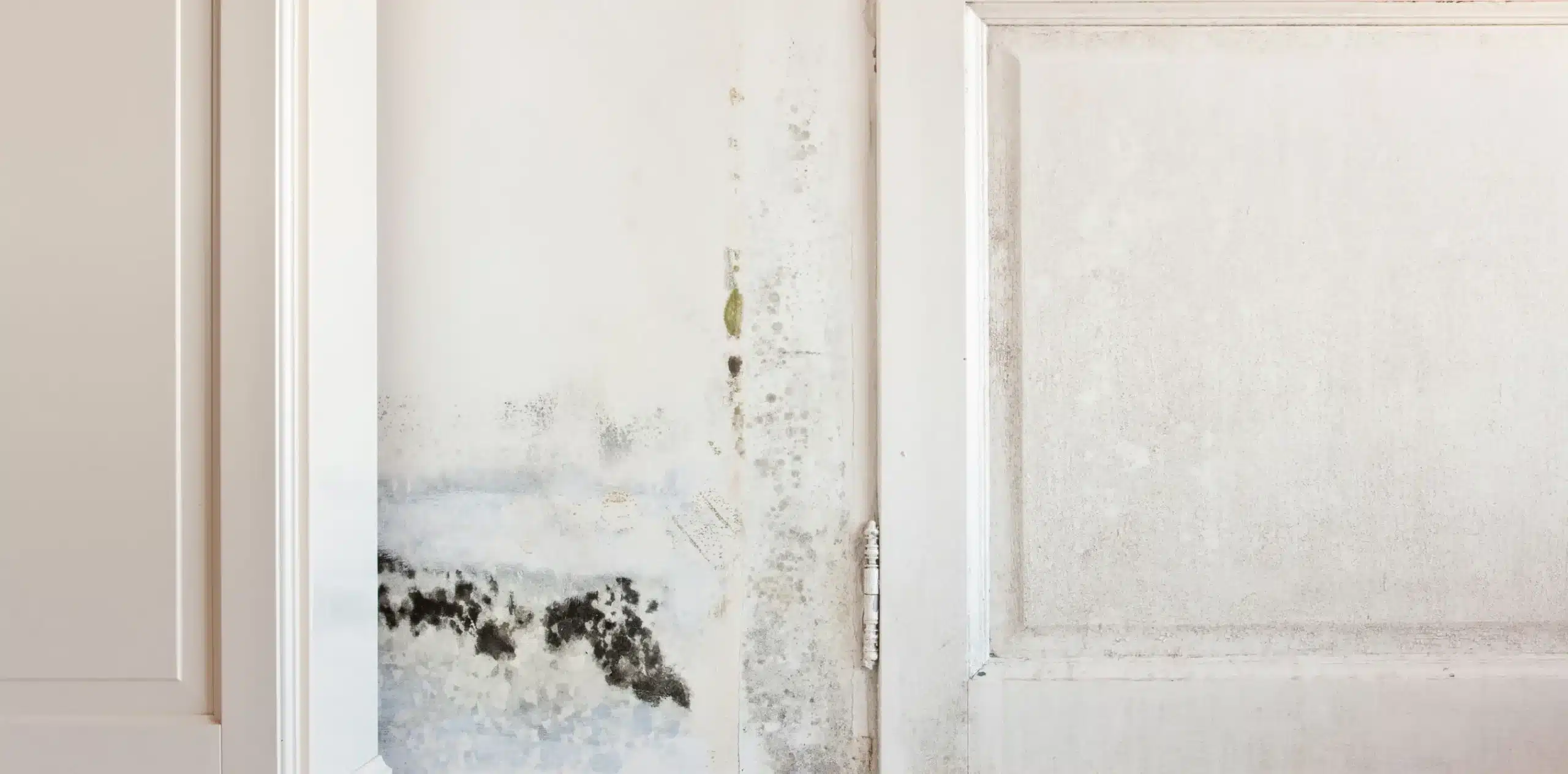
One of the most important points in this law and one that is easy to get wrong is that cleaning surface mould and fixing the root cause are not the same. A competent-person investigation must find out whether mould is:
- The result of everyday condensation that can be managed through ventilation, heating advice, and tenant guidance, or
- The result of a building fault, such as broken damp-proofing, water ingress, poor insulation, ventilation failure, or moisture in the structure, that needs proper repair.
When the cause is truly outside the building itself (for example, condensation caused by tenant habits with no building fault), landlords should talk with tenants and provide proper advice rather than treating it as a repair. But if there is a building fault, just wiping the mould and painting over will not help. It is exactly what this law intends to prevent. Treating only the surface without fixing the cause means the mould will come back and the landlord will break the law again within weeks. Many landlords and housing teams currently fall short: they have a repairs process, but not a damp and mould diagnostic process that is fast, evidenced and structured to meet 10-3-5 working-day deadlines from a standing start.

What landlords should be doing now
With October fast approaching, the practical preparation work falls into a few clear areas:
- Check your current response time. See how long it takes from when a tenant reports a problem to when an investigation is set up. If it takes more than 10 working days now, that is the first gap to fix.
- Make sure you can get investigations done by qualified people. Whether in-house or through a specialist contractor, you need a way to quickly start a damp and mould check that provides written, evidence-based results, not just a spoken opinion. The 3-day written summary requirement means that investigation findings must be captured in a format that can be sent directly to the tenant, not reconstructed from notes afterwards.
- Arrange repair resources ahead of time. The 5-day start deadline only works if contractors are ready in advance. Waiting to find a contractor after the investigation will probably miss the deadline.
- Improve record-keeping. Clear documents, such as the dates of notification, investigation, written results, and the start of repair, protect landlords if a case is challenged or taken to court.
- Train front-line and repair staff to spot damp and mould reports right away as Awaab’s Law cases, not simply as regular maintenance requests, so the timeline doesn’t start late due to internal delays.
- Look out for emergency cases. Set up a separate, faster process for any report that might pose an immediate health risk, in accordance with the 24-hour rule.
Perfect Clean UK Mould and Damp Remediation
Our damp and mould remediation service is designed around the statutory timescales, not just good intentions:
- Rapid-response investigation and reporting, giving landlords the evidence-based, written findings they need to meet the 3-day reporting deadline with confidence.
- Root-cause diagnosis, not surface treatment. We identify whether mould stems from condensation, ventilation failure, or an underlying building defect, so repairs actually resolve the problem rather than delaying its return.
- Full remediation, from anti-microbial treatment and structural drying to remedying the underlying defect, is carried out to a standard that survives scrutiny if a case is challenged.
- Clear documentation at every stage, providing housing teams with a defensible audit trail for compliance and regulator reporting.
- Scalable capacity across Scotland and Northern England
October 2026 isn’t far away. Landlords and housing providers who put a tested process and a reliable specialist partner in place now will meet these new duties as a matter of routine. Those who wait will be building that process under pressure, with the clock already running and the cost of getting it wrong much higher than the cost of preparing for it.
Get in touch with Perfect Clean UK to discuss how we can assist with your damp and mould compliance ahead of the October 2026 deadline.