Ask any facilities manager or business owner in Scotland about bird droppings, and you will hear the same. Seagulls are stealing from bins. Pigeons on warehouse roofs, gulls circling industrial estates. The birds themselves are a protected part of Scotland’s natural environment, but the waste they leave behind is harmless.
Guano (the scientific and industry-standard word for built-up bird droppings) is classed as a biological danger in UK health and safety laws. This is because it contains live germs, creates harmful dust when dry, speeds up building damage, and can cause big legal problems for businesses if not handled correctly. Still, across Scotland (from Inverness to Ayr, Aberdeen to Glasgow), many commercial and industrial properties think of it as just a dirty mess.
This article is for the property managers, business owners, facilities teams, and everyone who wants to know the problem better. It covers what guano actually is, what it does to your building, and which sectors are most exposed to it. We cover what the law requires and how Perfect Clean Ltd delivers professional guano removal and bird dropping cleaning services across Scotland that are safe, compliant, and long-lasting.
What Is Guano and Why Is It So Dangerous?
The word “guano” comes from the Quechua language of South America, originally referring to the fertiliser-grade seabird deposits harvested from coastal islands. In a commercial cleaning and property management context, guano refers to any accumulated bird excrement: most commonly from feral pigeons, herring gulls, lesser black-backed gulls, starlings, and corvids such as crows and jackdaws.
What makes bird droppings truly dangerous and not just unpleasant is their biological and chemical makeup.
Biological Hazards
Guano is a known carrier of more than 60 transmissible diseases. The three most significant from a UK workplace perspective are the following:
- Psittacosis (Ornithosis): A bacterial infection caused by Chlamydia psittaci, spread through inhaling dust from dried droppings or feathers. Symptoms resemble severe flu and can progress to pneumonia.
- Histoplasmosis: A fungal lung infection caused by Histoplasma capsulatum, which thrives in guano-enriched soil and decomposing droppings. Most common around heavy accumulations such as those found under roosting sites or in roof voids.
- Cryptococcosis: A fungal disease caused by Cryptococcus neoformans, present in pigeon guano in particular. Rarely serious for healthy adults but potentially fatal for immunocompromised individuals.
Beyond these, guano also contains Salmonella, E. coli, Campylobacter, and various parasites. The key transmission route is aerosolisation: when dried droppings are disturbed by wind, foot traffic, or untrained attempts at cleaning, microscopic particles become airborne and can be inhaled over a wide area.
Chemical and Structural Hazards
Guano is highly acidic due to its content of uric acid, phosphoric acid, and nitric acid. These compounds attack a wide range of building materials:
- Concrete and render: Guano penetrates porous concrete, weakening it over time and causing spalling.
- Metal: Acid in guano accelerates oxidation. Exposed steel frameworks, gutters, and roof fixings are particularly vulnerable.
- Bitumen and EPDM roofing membranes: Guano is one of the most common causes of premature flat roof failure. The acids break down bituminous compounds, leading to cracking and eventually water ingress.
- Solar panels: Guano blocks photovoltaic cells, reducing energy output between 20% and 33% depending on the extent of coverage, and the acid etches the glass surface, causing permanent performance loss.
- Drainage systems: Nesting materials and guano combine to block gutters, downpipes, and grilles, leading to standing water and structural damage.
Light soiling is manageable; months or years of unaddressed accumulation can lead to repair costs many times greater than the cost of regular professional cleaning.
Which Sectors Are Most at Risk in Scotland?
Bird droppings are a universal problem, but some sectors carry a disproportionately high risk either because of the nature of their premises, the regulatory environment they operate in, or both.
Restaurants, Food Production and Processing Businesses
Food businesses face the most serious regulatory exposure from bird droppings. Environmental Health Officers conducting inspections routinely cite bird fouling as a critical non-compliance issue. A single inspection failure can result in immediate closure notices, prosecution, and severe reputational damage that no marketing budget can undo.
Self-Storages, Warehousing and Logistics
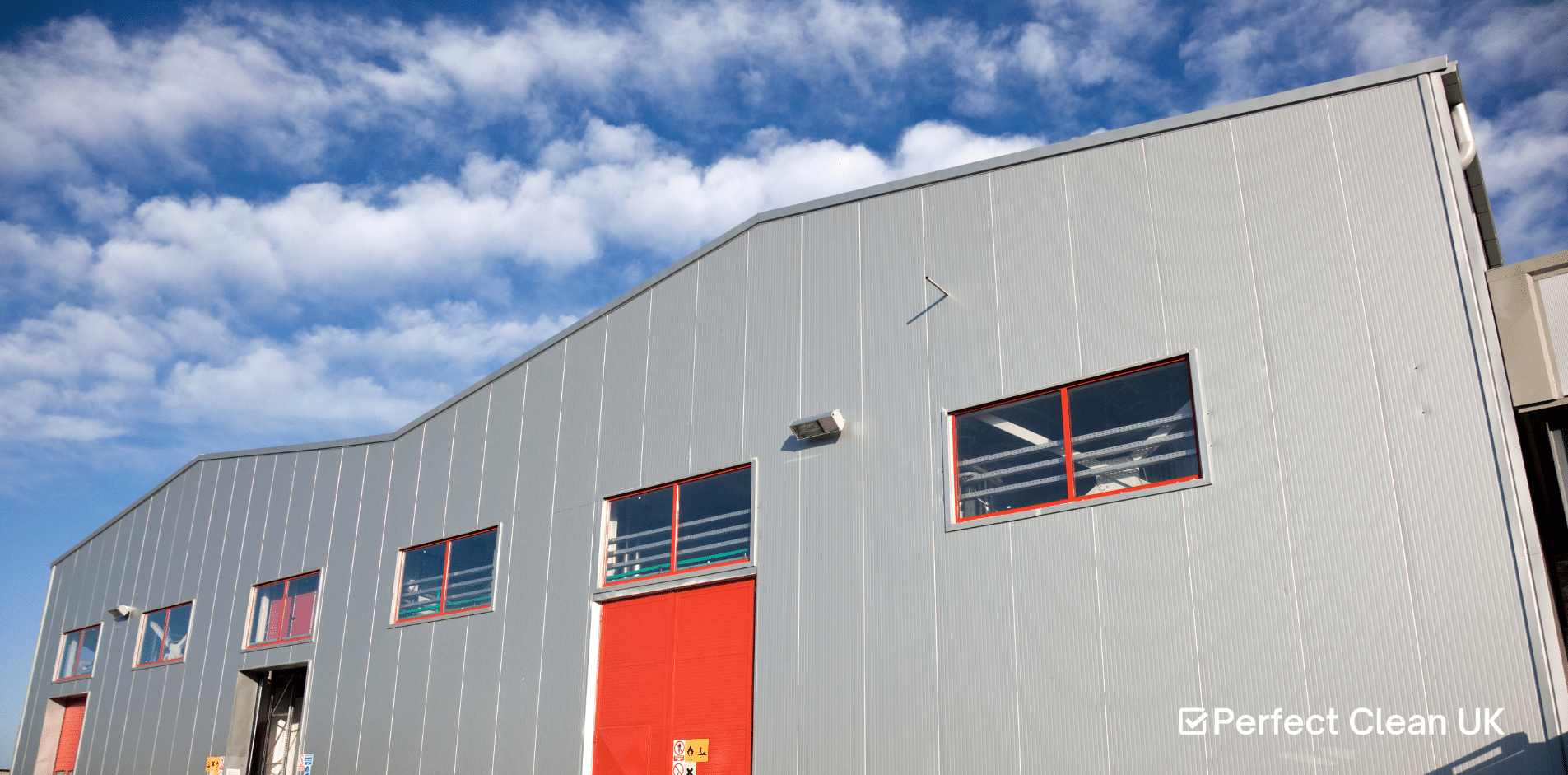
Scotland’s expanding logistics sector, highly driven by e-commerce, whisky distribution, and agricultural supply chains, occupies enormous amounts of flat-roofed warehouse space that is irresistible to roosting and nesting birds. Interior contamination is common, as loading bay doors are often left open, and birds are able to enter through ridge vents or damaged roof lights, and guano accumulates on racking, floors, and goods. Staff exposure to contaminated environments creates both health and legal risk.
Retail and Leisure
Shopping centres, retail parks, hotels, leisure centres, and stadiums in Scottish cities face a dual problem: accumulation in roof spaces and plant areas, combined with highly visible fouling on external facades, canopies, and car parks that directly affects customer perception and footfall. Studies consistently show that customers judge hygiene based on the exterior condition of a business’s premises.
Transportation Infrastructure
Bridges, underpasses, rail infrastructure, ferry terminals, and multi-storey car parks are prime roosting sites. The structural implications of guano on steel and concrete infrastructure are well documented, and the requirement for access to height in these environments means that specialist rope access or MEWP-equipped cleaning teams are essential.
Agricultural Buildings
Farm buildings: in particular, poultry units, grain stores, and large open-sided sheds accumulate enormous volumes of wild bird guano in addition to the managed waste of the birds being farmed. Cross-contamination risk and the potential for avian influenza transmission make professional guano removal in agricultural settings a hygiene and biosecurity priority.

Social Housing and Property Sector
Social landlords and councils managing large housing estates, multi-storey blocks, and community buildings have a statutory duty to maintain properties to a safe and habitable standard.
Guano accumulation in communal areas, on balconies, or around building entrances creates both slip hazards and infection risk for vulnerable residents.
Perfect Clean Ltd has direct experience working with Scottish local authorities on exactly these challenges.
What does the UK Law Require?
The legal framework covering guano management in UK workplaces is extensive, and ignorance of it is not a defense.
- Health and Safety at Work etc. The Act 1974 places a general duty on employers to ensure, so far as reasonably practicable, the health, safety, and welfare of employees. Knowingly allowing staff to work in an environment contaminated with biological hazards, including bird droppings, without taking appropriate action is a breach of this duty.
- The Control of Substances Hazardous to Health Regulations 2002 (COSHH) require employers to assess the risk from biological agents in the workplace, including those present in guano, and to implement suitable controls. Guano cleanup that generates aerosols without appropriate respiratory protection and containment is a COSHH breach.
- The Management of Health and Safety at Work Regulations 1999 require a written risk assessment for any work involving guano removal. This is not optional, and it should be conducted by a competent person.
- The Environmental Protection Act 1990 and the Hazardous Waste Regulations 2005 classify accumulated guano as hazardous waste, meaning it must be collected, transported, and disposed of by a licensed waste carrier, with appropriate documentation (Waste Transfer Notes). Fly-tipping or unlicensed disposal carries unlimited fines and potential criminal prosecution.
- The Wildlife and Countryside Act 1981 (as amended in Scotland) protects all wild birds, their active nests, and eggs. Cleaning work that destroys or disturbs an active nest is a criminal offence. Professional cleaning teams must time work to avoid the nesting season or obtain the appropriate Scottish Natural Heritage licence where this is unavoidable.
Failure to comply with any of these requirements, whether through inaction or through attempting DIY guano removal without proper protocols, can result in HSE improvement or prohibition notices, enforcement action by the Scottish Environment Protection Agency (SEPA), local authority prosecution, and civil liability in the event of employee or public illness.
Why invest in Professional Guano Removal?
Scotland’s commercial and industrial property owners face a genuine, legally significant, and structurally damaging challenge from bird droppings. Guano is a classified biological hazard, a structural threat, and a potential source of serious legal liability. The businesses that manage it professionally, consistently, and with proper documentation will spend less over time, protect their workforce, and face less risk from regulatory action than those who ignore it or attempt to manage it without the right expertise.
Perfect Clean Ltd brings the training, equipment, compliance knowledge, and Scotland-wide reach to make professional guano removal accessible and straightforward for businesses of every size. We carry out the work correctly, completely, and with full documentation so that you can demonstrate compliance and move on.
Ready to protect your Property?
Contact us today at 0800 0431 744 or arrange a free site survey. Our specialists are available across Scotland.