
How to Ensure Safe Biohazard Decontamination: The Complete 7-Step Protocol Revealed
The Science of Decontamination: A Guide to UK Biohazard Cleaning Standards Introduction: Beyond the Mop and Bucket When faced with a situation involving biohazards, such as a trauma scene, an unattended death, or the discovery of hazardous materials, the immediate response is often to think of…
By Rafal Piskorski, Health and Safety Manager · Updated · Biohazard Cleaning & Decontamination
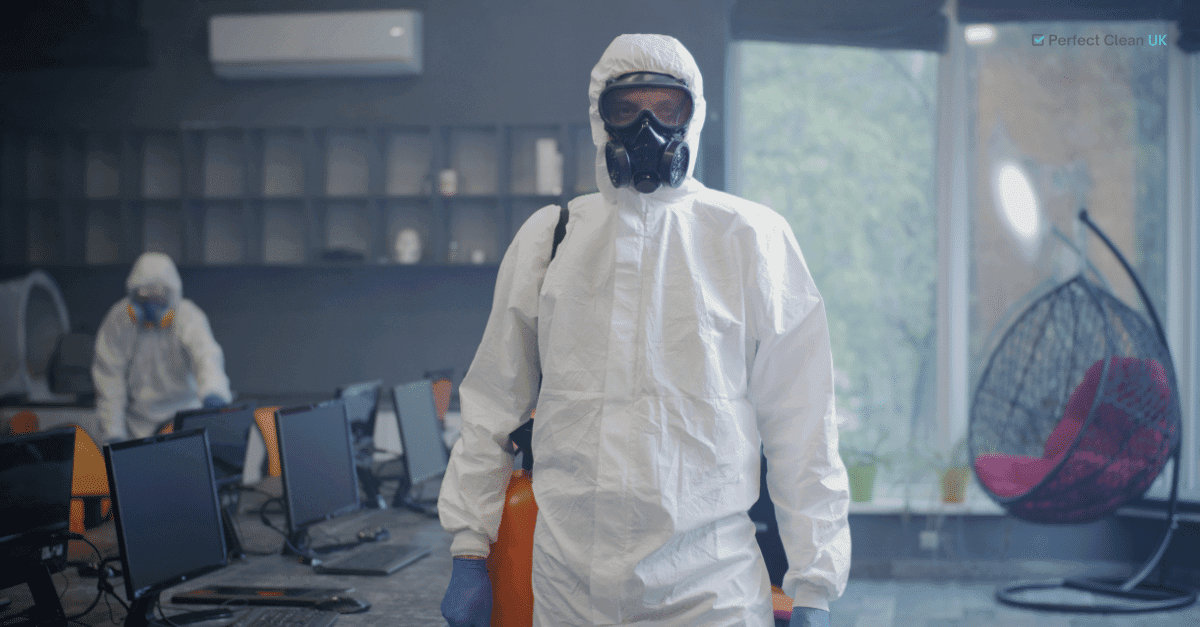
The Science of Decontamination: A Guide to UK Biohazard Cleaning Standards
Introduction: Beyond the Mop and Bucket
When faced with a situation involving biohazards, such as a trauma scene, an unattended death, or the discovery of hazardous materials, the immediate response is often to think of ‘cleaning’ in the conventional sense. However, the reality of biohazard remediation is a world away from routine janitorial work. It is not about making a space look clean; it is about making it scientifically and verifiably safe.
This process, known as decontamination, is a rigorous discipline grounded in microbiology, chemistry, and public health regulations. Understanding the science behind it is crucial for any business, landlord, or public body responsible for the safety of their premises. This guide will demystify the standards, processes, and scientific principles that govern professional biohazard cleaning in the UK.
What Constitutes a Biohazard?
A biological hazard, or biohazard, is any biological substance that poses a threat to the health of living organisms, primarily humans. In the context of cleaning, this includes a wide range of materials that can carry infectious agents.
According to the Health and Safety Executive (HSE), this includes “a micro-organism, a cell culture, or a human endoparasite, whether or not genetically modified, which may cause infection, allergy, toxicity or otherwise create a hazard to human health.”
Common examples encountered by specialist cleaning teams include:
- Blood and Body Fluids: These can carry bloodborne pathogens like HIV, Hepatitis B, and Hepatitis C.
- Human and Animal Remains: Decomposition presents a complex set of biological risks.
- Sewage and Wastewater: Contaminated with bacteria, viruses, and parasites.
- Sharps and Contaminated Objects: Needles or broken glass that can cause injury and transmit disease.
Failure to properly remediate these materials doesn’t just leave behind stains and odours; it leaves an invisible threat that can have severe health and legal consequences.
The Hierarchy of Clean: More Than Just a Surface Wipe
In the world of decontamination, not all ‘cleaning’ is equal. There is a scientific hierarchy that defines the level of microbial control achieved. Understanding these terms is fundamental.
Term
Definition
Purpose
Example of Use
Cleaning
The physical removal of foreign material (e.g., soil, organic matter) from objects.
To remove visible dirt and prepare surfaces for disinfection.
Wiping a surface with detergent and water.
Sanitising
Reducing the number of bacteria to a safe level, as judged by public health standards.
To lower the risk of infection on general surfaces.
Using a food-safe sanitiser on a kitchen counter.
Disinfecting
The elimination of virtually all pathogenic micro-organisms on inanimate objects.
To kill harmful bacteria and viruses on high-risk surfaces.
Applying a hospital-grade virucide to a surface after a blood spill.
Sterilising
The complete destruction of all forms of microbial life, including spores.
For critical medical instruments and laboratory equipment.
Using an autoclave to sterilise surgical tools.
For biohazard remediation, cleaning followed by disinfection is the required standard. Simply sanitising a scene is insufficient and dangerous.
The 7-Step Decontamination Protocol: A Scientific Process
A professional biohazard cleaning operation is a systematic, multi-stage process. Each step is designed to mitigate risk, ensure thoroughness, and comply with UK regulations.
Step 1: Site Assessment and Safety
Before any work begins, a trained specialist conducts a thorough risk assessment. This involves identifying the types of biohazards present, assessing the affected areas, and establishing a safe work zone. All personnel must wear appropriate Personal Protective Equipment (PPE), which can range from gloves and masks to full-body biohazard suits with respirators.
Step 2: Containment
To prevent cross-contamination, the affected area is sealed off from the rest of the property. This may involve using plastic sheeting and negative air pressure units fitted with HEPA filters to ensure that airborne pathogens do not escape the work zone.
Step 3: Gross Contamination Removal
This stage involves the careful removal and bagging of all visible biological material, contaminated items, and debris. This is done using specialised tools and techniques to minimise aerosolisation (the process of particles becoming suspended in the air).
Step 4: Initial Cleaning
Once the bulk material is removed, a meticulous cleaning process begins. Surfaces are treated with professional-grade detergents to break down and lift any remaining organic matter. This step is critical because organic material can shield pathogens from disinfectants, rendering them ineffective.
Step 5: Targeted Disinfection
With surfaces now clean, a broad-spectrum disinfectant is applied. These are powerful chemical agents specifically chosen for their efficacy against a wide range of viruses, bacteria, and fungi. The disinfectant must be left on the surface for a specific “dwell time” to ensure it effectively kills the targeted pathogens.
Step 6: Verification and Testing
How do we prove a surface is truly clean? Professionals use scientific verification methods like ATP (Adenosine Triphosphate) testing. ATP is an energy molecule found in all living cells. An ATP meter measures the amount of ATP on a surface, providing a quantifiable measure of cleanliness. A low reading indicates that the decontamination has been successful.
Step 7: Compliant Waste Disposal
All contaminated materials are classified as clinical or hazardous waste. They must be segregated, placed in correctly labelled and sealed containers (such as red biohazard bags and sharps bins), and transported by a licensed waste carrier to a specialised disposal facility. A full paper trail, including waste transfer notes, must be maintained as required by the Environmental Protection Act 1990.
The Regulatory Framework: UK Biohazard Cleaning Standards
Professional biohazard cleaning is not self-regulated. It is governed by a strict framework of UK health and safety law designed to protect both the public and the cleaning operatives.
- The Health and Safety at Work etc. Act 1974: This is the primary piece of legislation covering occupational health and safety in Great Britain. It places a duty on employers to ensure the health, safety, and welfare of their employees and anyone affected by their business activities.
- Control of Substances Hazardous to Health (COSHH) Regulations 2002: This is the cornerstone of biohazard management. COSHH requires employers to control substances that are hazardous to health. This involves assessing risks, implementing control measures (like using correct PPE), and ensuring employees are properly trained.
- The Health and Safety Executive (HSE): The HSE is the UK’s national regulator for workplace health and safety. It provides guidance, enforces standards, and can prosecute companies that fail to comply with the law.
Choosing a Professional: What to Look For
When you require decontamination services, you are not just hiring a cleaner; you are engaging a scientific expert. When choosing a provider, ensure they can demonstrate:
- Specialist Training: Ask for evidence of training in biohazard remediation and COSHH.
- Correct Insurance: Standard public liability insurance does not cover biohazard work. A specialist firm must have specific insurance for this high-risk activity.
- Adherence to UK Standards: They should be able to articulate their process and how it aligns with HSE and COSHH guidelines.
- Proper Equipment: They must use professional-grade PPE, disinfectants, and testing equipment.
- Licensed Waste Disposal: They must hold a valid waste carrier licence and use appropriate disposal methods.
Conclusion: A Matter of Science, Not Sight
Decontamination is a field where the stakes are incredibly high. An area that looks clean can still harbour dangerous, invisible threats. The science of biohazard cleaning provides the framework, processes, and verification needed to transform a hazardous environment back into a safe one.
By understanding the difference between cleaning and disinfection, the importance of regulatory compliance, and the rigorous steps of a professional decontamination protocol, you can make informed decisions to protect your staff, your visitors, and your reputation.
If you are facing a situation that requires specialist decontamination services, do not take risks. Contact the experts at Perfect Clean Ltd. for a confidential consultation and ensure the job is done scientifically, safely, and correctly.
Beyond First Aid: Professional Biohazard Cleanup Protects Your Business Reputation
Beyond the First Aid Kit: A UK Employer’s Guide to Blood and Body Fluid Clean-Up
Introduction: The Unseen Risk in Every Workplace
In any workplace, accidents can happen. A slip, a fall, or a medical emergency can result in the release of blood or other bodily fluids. While the immediate focus is rightly on providing first aid and care to the affected individual, what happens next is a critical test of an employer’s commitment to health, safety, and legal compliance. The presence of blood or bodily fluids constitutes a biohazard, a risk that extends far beyond a simple stain on the carpet. Improperly handled, it can lead to serious illness, legal penalties, and significant damage to a company’s reputation.
Many businesses are equipped with first aid kits and trained first aiders, but few have a clear protocol for the safe and compliant clean-up of a biohazardous incident. This is a dangerous oversight. Under UK law, employers have a legal duty of care to protect their staff and visitors from workplace hazards, and this includes the risks posed by biological materials. A mop and bucket are not sufficient; in fact, they can make the situation worse by spreading contamination.
This article provides a comprehensive guide for UK employers on the correct procedures for managing a blood or body fluid spill. We will cover your legal obligations, the health risks involved, the steps of a professional biohazard cleanup, and why engaging a specialist cleaning service is the only way to truly protect your workplace and your reputation.
Your Legal Obligations as a UK Employer
When it comes to workplace safety, ignorance is no defence. Several key pieces of UK legislation create a framework of responsibility for employers in managing biohazards.
•The Health and Safety at Work etc. Act 1974: This is the cornerstone of British health and safety law. It places a general duty on employers to ensure, so far as is reasonably practicable, the health, safety, and welfare at work of all their employees. This includes protecting them from the risks of biological hazards.
•The Control of Substances Hazardous to Health (COSHH) Regulations 2002: COSHH is a critical regulation that requires employers to control substances that are hazardous to health. Blood and other bodily fluids are explicitly classified as biological agents under COSHH. The regulations require employers to:
•Conduct a risk assessment of potential exposure.
•Implement control measures to prevent or reduce exposure.
•Provide information, instruction, and training to employees.
•Have procedures in place for dealing with accidents and emergencies.
•The Management of Health and Safety at Work Regulations 1999: These regulations reinforce the need for risk assessments and the implementation of necessary preventive and protective measures.
Failure to comply with these regulations can lead to enforcement action by the Health and Safety Executive (HSE), which can include improvement notices, prohibition notices, and, in serious cases, prosecution with the potential for unlimited fines and even imprisonment.
The Health Risks: More Than Meets the Eye
The primary danger associated with blood and bodily fluids is the potential for transmission of bloodborne pathogens (BBPs). These are infectious microorganisms in human blood that can cause disease in humans. The most well-known BBPs include:
•Hepatitis B (HBV): A viral infection that attacks the liver and can cause both acute and chronic disease.
•Hepatitis C (HCV): Another viral infection that can lead to chronic liver disease and cirrhosis.
•Human Immunodeficiency Virus (HIV): The virus that causes Acquired Immunodeficiency Syndrome (AIDS).
These viruses can survive outside the body for a period of time, posing a risk to anyone who comes into contact with the contaminated area. Exposure can occur through contact with broken skin, mucous membranes (eyes, nose, mouth), or through injuries from contaminated sharps (e.g., needles, broken glass).
The Inadequacy of Standard Cleaning Procedures
It is a common misconception that a workplace’s regular cleaning staff are equipped to handle a biohazard spill. This is incorrect and puts those employees at serious risk. Here’s why standard cleaning is not appropriate:
•Lack of Training: Standard cleaners are not trained in the specific protocols for handling biohazardous materials, including the correct use of PPE and the safe disposal of clinical waste.
•Inadequate Equipment: They do not have the necessary PPE (e.g., full-body suits, respirators) to protect themselves from exposure.
•Ineffective Cleaning Agents: Standard cleaning products are not designed to kill bloodborne pathogens. Professional biohazard remediation uses hospital-grade disinfectants with proven virucidal properties.
•Cross-Contamination: Without proper procedures, there is a high risk of spreading the contamination to other areas of the workplace, increasing the risk of exposure to others.
The Professional Biohazard Clean-Up Process
A professional biohazard remediation service follows a strict, multi-stage process to ensure the affected area is returned to a safe and hygienic state.
Stage
Description
1. Assessment and Control
The team will first assess the scene to identify the extent of the contamination and establish a controlled safety zone to prevent unauthorised access.
2. Removal of Contaminated Materials
All visible traces of blood and bodily fluids are removed. Any items that are porous and cannot be salvaged (e.g., carpets, soft furnishings) are safely removed and bagged for disposal as clinical waste.
3. Cleaning and Disinfection
The area is meticulously cleaned using specialist equipment. This is followed by the application of a broad-spectrum, hospital-grade disinfectant to all surfaces, ensuring that any remaining pathogens are eliminated.
4. Deodorisation
If necessary, the area is treated with professional deodorising agents to remove any lingering odours.
5. Safe Disposal of Waste
All contaminated materials, including the team’s PPE, are disposed of in accordance with the Environmental Protection Act 1990 as controlled clinical waste.
6. Certification
Upon completion, a reputable company will provide a certificate of sanitisation, giving you a formal record that the area has been professionally decontaminated and is safe to re-enter.
Protecting Your Reputation: The Business Case for Professionalism
How a business responds to an incident in the workplace can have a lasting impact on its reputation. A swift, professional, and compassionate response demonstrates a company’s commitment to the well-being of its staff and customers. It shows that you take your responsibilities seriously.
Conversely, a mishandled incident can have severe reputational consequences:
•Damage to Employee Morale: Asking untrained staff to clean up a biohazard is not only dangerous but also deeply unfair and can lead to a loss of trust and morale.
•Negative Public Perception: If news of an incident and a subsequent poor response becomes public, it can lead to a perception that the company is careless and puts profit before people.
•Loss of Customer Confidence: In a customer-facing business, a visible biohazard incident that is not handled professionally can deter customers and damage your brand.
Conclusion: A Non-Negotiable Aspect of Workplace Safety
The clean-up of blood and bodily fluids is not a janitorial task; it is a specialist field of public health and safety. The legal, health, and reputational risks associated with improper handling are simply too great to ignore. As an employer, your duty of care is clear: you must have a plan in place for dealing with such incidents, and that plan must involve professional, accredited experts.
By engaging a specialist biohazard remediation service, you are not just cleaning a spill; you are protecting your employees, complying with the law, and safeguarding the reputation of your business. It is a non-negotiable investment in a safe and responsible workplace.
Perfect Clean Ltd. offers a 24/7 emergency response for biohazard incidents across the UK. Our highly trained and accredited teams provide a discreet and professional service, ensuring your workplace is returned to a safe condition with minimal disruption. Contact us today to learn more about our services and how we can help you prepare for the unexpected.